
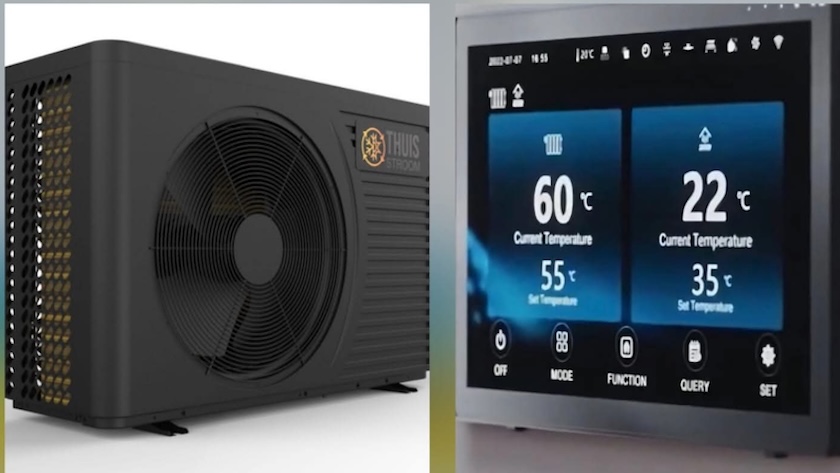
Heat Pumps – How They Work, Types, Performance and Why They’re a Smart Investment
1. 🔧 What is a Heat Pump?
A heat pump is an energy-efficient heating system that transfers heat from a natural source into your home using electricity to power a compressor.
👉 Think of it as a refrigerator working in reverse.
Rather than generating heat by burning fuel, a heat pump simply moves existing heat from one place to another.
Heat can be extracted from:
– Outdoor air
– The ground
– Groundwater or other water sources
The heat is then used to provide:
– Central heating
– Domestic hot water
2. ⚙️ How Does a Heat Pump Work?
Heat pumps operate using the refrigeration cycle:
– Evaporator – the refrigerant absorbs heat from the outside environment.
– Compressor – compresses the refrigerant, increasing both pressure and temperature.
– Condenser – transfers the heat into your home’s heating system.
– Expansion valve – reduces the pressure before the cycle starts again.
👉 A heat pump doesn’t create heat – it transfers it.
3. 📊 Performance – COP, SCOP and EER
COP (Coefficient of Performance)
Measures how efficiently the heat pump converts electricity into heat.
Example:
COP = 4
1 kWh of electricity produces approximately 4 kWh of heating.
SCOP (Seasonal Coefficient of Performance)
Shows the average efficiency over an entire heating season.
EER (Energy Efficiency Ratio)
Used to measure cooling performance.
👉 Modern heat pumps typically deliver three to five times more heat than the electricity they consume.
4. 🧊 Types of Heat Pumps
4.1 Air Source Heat Pump (ASHP)
The most common type installed in UK homes.
It extracts heat from the outside air and transfers it into your central heating and hot water system.
Advantages
✔️ Lower installation costs
✔️ Quick installation
✔️ Provides central heating and domestic hot water
✔️ Suitable for underfloor heating and correctly sized radiators
Considerations
– Performance gradually reduces during extremely cold weather.
– Correct system design is essential.
Popular manufacturers include:
– Daikin
– Mitsubishi Electric
– Panasonic
– Viessmann
4.2 Ground Source Heat Pump (GSHP)
Extracts heat from the ground using underground pipework.
Advantages
✔️ Exceptional efficiency
✔️ Stable performance throughout the year
✔️ Typical COP between 4 and 6
Considerations
– Higher installation costs
– Requires boreholes or ground collectors
– Best suited to properties with sufficient outdoor space
4.3 Water Source Heat Pump
Uses groundwater, rivers or lakes as the heat source.
Advantages
✔️ Extremely efficient
Considerations
– Only suitable where local site conditions allow.
4.4 Air-to-Air Heat Pump
Works similarly to a reversible air conditioning system.
Advantages
✔️ Affordable
✔️ Fast installation
✔️ Heating and cooling from one system
Considerations
– Does not provide domestic hot water.
5. 🌡️ Do Heat Pumps Work in Winter?
One of the most common questions is:
👉 „Will it still work during winter?”
Absolutely.
Modern heat pumps are designed to operate in temperatures as low as -20°C to -25°C.
Although efficiency naturally decreases as outdoor temperatures fall, today’s systems maintain reliable performance thanks to:
– Inverter compressor technology
– Modern refrigerants such as R32
– Built-in electric backup heaters where required
6. 🏠 Which Heating Systems Are They Compatible With?
Heat pumps perform best with low flow temperatures.
Ideal for:
✔️ Underfloor heating (typically 30–35°C)
Also suitable for:
✔️ Low-temperature radiators
Less suitable for:
Traditional radiators designed to operate at high flow temperatures.
👉 Heat pumps love low-temperature heating systems.
7. 💰 Installation Costs and Payback
The initial investment is typically higher than installing a gas boiler.
However, running costs are significantly lower.
Typical return on investment ranges from 3–7 years, depending on:
– Property insulation
– Energy prices
– Heating demand
– System design
Government grants may also be available, subject to eligibility.
8. ⚡ Electricity Consumption
Example:
Heating demand = 10 kW
Heat pump COP = 4
Electricity required = 2.5 kW
👉 You only pay for the electricity consumed, while the remaining heat is taken free from nature.
9. 🌍 Environmental Benefits
✔️ Lower carbon emissions
✔️ No fossil fuels
✔️ Supports the UK’s Net Zero targets
✔️ Perfectly compatible with solar PV systems
👉 Combine a heat pump with solar panels and you can reduce your heating costs even further.
10. 🔧 Main Components
– Compressor
– Evaporator
– Condenser
– Expansion valve
– Refrigerant
– Electronic control system
11. 🧠 Frequently Asked Questions
Are heat pumps expensive?
The upfront cost is higher, but monthly energy bills are usually much lower.
Are they reliable?
Yes.
Heat pumps have fewer moving mechanical parts than conventional boilers, making them highly reliable when professionally installed and serviced.
Are they noisy?
Modern outdoor units are very quiet, typically operating below 50 dB.
Do they work in cold climates?
Yes.
Heat pumps are designed specifically for Northern European climates, including the UK.
What happens during a power cut?
Like any electrically powered heating system, the heat pump will stop operating until power is restored.
Backup power solutions can also be incorporated if required.
12. 🧩 Correct Sizing Is Essential
The biggest mistakes are:
❌ Installing an undersized system
❌ Installing an oversized system
A properly designed system requires a professional heat loss calculation that considers:
– Property size
– Insulation
– Windows
– Ventilation
– Local climate
Correct sizing is one of the most important factors affecting efficiency.
13. 🏆 Key Benefits
✔️ Lower energy bills
✔️ Consistent indoor comfort
✔️ Automatic operation
✔️ Smart home compatibility
✔️ Low maintenance
✔️ Environmentally friendly
✔️ Potential eligibility for government incentives
14. ⚠️ Things to Consider
– Higher initial investment
– Efficiency varies with outdoor temperature
– Professional design is essential
– Existing radiators may need upgrading in some properties
15. 🧾 Why Choose a Heat Pump?
Save Money
Lower monthly heating costs through improved energy efficiency.
Enjoy Greater Comfort
Stable indoor temperatures without the fluctuations common with traditional heating systems.
Increase Energy Independence
Pair your heat pump with solar PV and reduce your reliance on expensive energy.
Heat Pump vs Traditional Heating
Compared with gas boilers, electric heating or solid fuel systems, a heat pump requires a larger initial investment but can reduce heating costs by 30–60%, requires less maintenance and often pays for itself within 4–6 years.
16. 🧮 A Simple Example
If your heat pump operates with a COP of 4, every 1 kWh of electricity purchased delivers approximately 4 kWh of useful heating.
That means you receive around 75% of your heating energy free from the environment, paying only for the electricity needed to run the system.
17. 🔄 Works Seamlessly With
– Solar PV panels
– Hot water cylinders
– Fan coil units
– Smart home systems
– Battery storage systems
18. 🧭 Conclusion
A heat pump is one of the most efficient, environmentally friendly and cost-effective heating solutions available today.
It delivers reliable heating, lower running costs, improved comfort and can produce three to five times more useful heat than the electrical energy it consumes.
Contact Ansera
📞 07767 977912
🌐 www.ansera.co.uk

